Images & Words by Francesca Russell
"What if a place becomes the right place only by our choosing to love it?"
– Melody Warnick, This Is Where You Belong
I moved to California from England when I was seven, just old enough to be conscious of feeling like an outsider. The other kids said I “talked funny.” That was the start of lifelong search to find the place where I belong – the place that truly felt like home.
That feeling of not quite fitting in has followed me through every move. From the south bay where I grew up, to college in San Diego, then Oakland and San Francisco before moving to New York City at age 27. I spent ten years in New York, some of those traveling around the country, before I got pregnant with my first baby. That’s when I moved to the suburbs of Long Island to be closer to my then-partner's family.
The first few years on Long Island I lived in a haze, taking care of my daughter, and then my son, who was born two years later. Aside from my partner's family, I knew no one here.
On the surface, our town looks fairly idyllic – if suburbs are your thing. Rows of capes and colonials, American flags in front of most homes, front porches, people out walking their dogs. We're a short train ride from New York City, but far enough away that we can easily park our cars in front of our houses without having to circle the block for an hour.
A few years in, I started to see the cracks.
“I learned that I could change things for myself, for the better, by actively working to cultivate this thing called ‘place attachment.’”
They became really apparent after the 2016 election. I think that’s probably how it was for a lot of places around the country. Or maybe I was just oblivious before that, my days wrapped up in the challenges of parenting two little kids. The town Facebook groups became hotbeds of bigotry and general disrespect.
Then during the pandemic, the hate grew even louder. Everyone was stuck in their homes, frustrated and angry, becoming keyboard warriors. I would look at my neighbors and wonder, "Are they who I think they are?"
What once felt like a welcoming place felt unnerving.
The months went by. The world opened up again. The police started coming to the school board meetings to keep people in order.
My then-partner worked all the time. I was by myself, and I was depressed. I was lonely. On a whim, I picked up Melody Warnick's book This Is Where You Belong: Finding Home Wherever You Are. And that’s when I learned that I could change things for myself, for the better, by actively working to cultivate this thing called “place attachment.”
“We create our places everyday by the way we choose to view them."
At its simplest, place attachment is the emotional bond we feel to certain places – the nostalgia of a childhood home, the soft spot in your heart when you hear the name of a city you once lived in. But it's more than a feeling. Researchers have found that this connection to where you live can significantly influence a person's sense of identity, well-being, and behavior. It shapes how we see ourselves, how we interact with our community, and how invested we become in the places we call home.
Warnick writes, “Our experience of the place where we live depends entirely on who we are, how we interact with it, and how we interpret what's happening around us. We create our places everyday by the way we choose to view them."
The way we CHOOSE to view them. How powerful is that? We have agency over our own situation. It's not something that just happens to lucky people who end up in the right town. It's something you can work at. You can choose to see the good in your surroundings. For someone like me – someone who had spent a lifetime feeling not-quite-home – this was a revelation.
“Our relationship to where we live is not fixed. It can be nurtured, deepened, and transformed.”
Another concept that is a companion piece to place attachment is “placemaking.” This is a term I learned as I started to read more about the topic. Place attachment and placemaking are related but distinct concepts, and it's worth understanding both.
Place attachment is the internal, emotional side – the bond a person feels toward a place. It lives inside us. It's personal, psychological, sometimes irrational.
Placemaking is the external, active side – the deliberate effort to design and shape public spaces and communities so that they foster connection, belonging, and emotional engagement. Placemaking is an approach to urban planning and community development that starts with the question: What do people need from this place in order to love it?
Placemaking considers "third places" (a term for gathering spots that are neither home nor work – cafés, parks, libraries, community centers, barbershops) as essential infrastructure. It recognizes that the more residents feel attached to a place, the more they invest in its success.
Peter Kageyama, one of my favorite writers on the topic of placemaking, puts it beautifully: "We need to remember that any community is made up of millions of acts, positive and negative, which at a distance become the whole we perceive. Each of us contributes to that whole. Each of us makes or breaks the city in small ways every day as we lead our lives."
Both place attachment and placemaking share a core truth: our relationship to where we live is not fixed. It can be nurtured, deepened, and transformed.
“The long exercise of ‘insisting on seeing a place's charms’ has saved me.”
With the help of Warnick's book, I began taking charge of my own relationship with where I live. I worked hard every day at nurturing my attachment to it. Photography played a huge part.
I took my camera everywhere and photographed little things around the neighborhood that stood out to me in a positive way. I started learning about the history of the area and went to seek out old houses and gravestones and churches that were still here, and I photographed them. I wanted perspective on the area – to both zoom out and learn the stories of it from years past but also zoom way in and note my favorite tree in the neighborhood. Warnick writes, “We must forcefully insist on seeing a place’s charms.”
And wouldn’t you know? It’s worked.
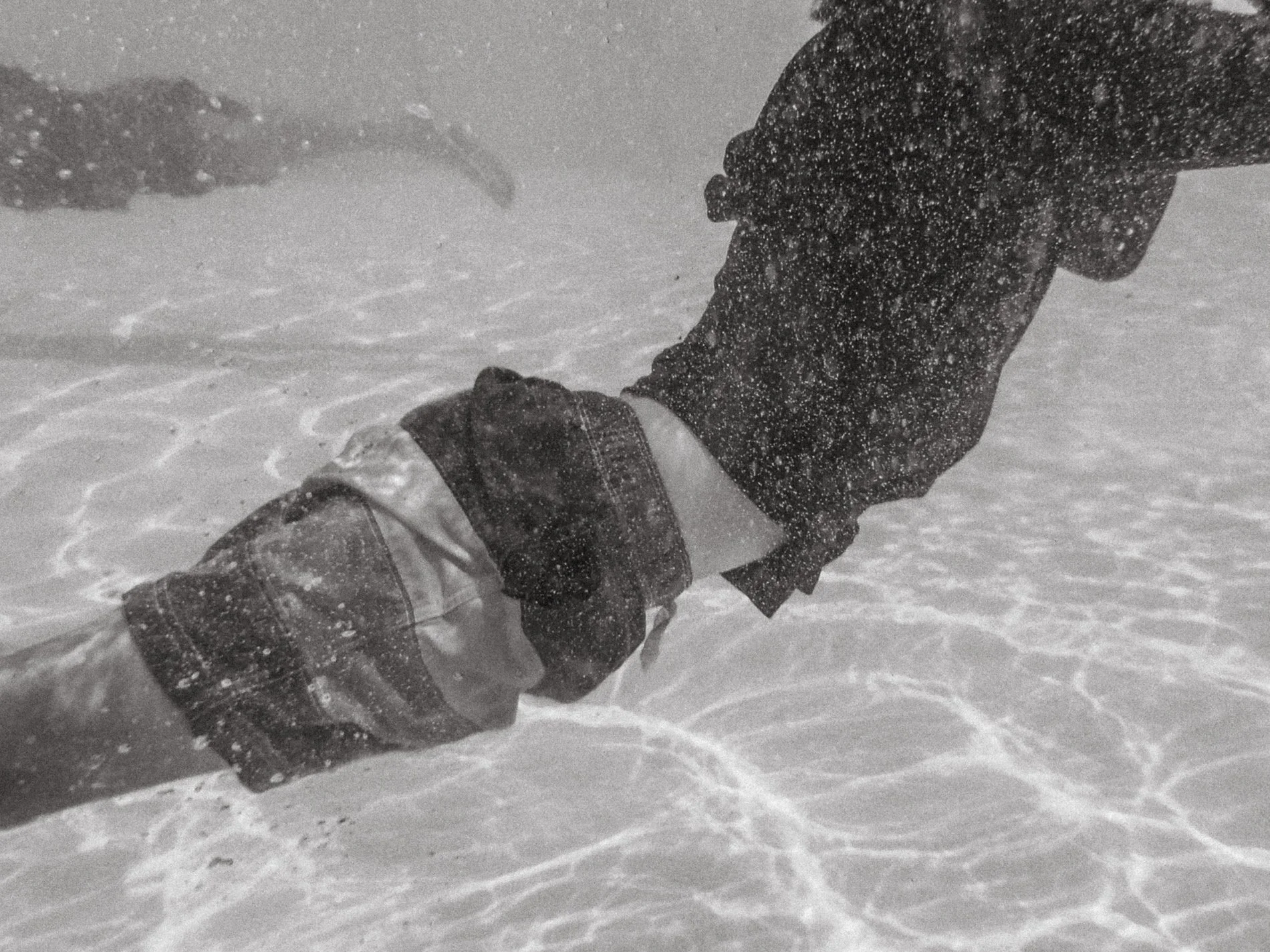
“When you photograph a place, you are forced to look – really look.”
The years have flown by. I am now a single mom of my two kids, and the family that brought me here to Long Island is no longer in my life. My kids are in middle school and totally enmeshed in the community, so I am committed to staying here at least until they are out of high school. Luckily, the long exercise of "insisting on seeing a place's charms" has saved me. I am happy here.
Does it feel like home? I think so. But I've also realized that more than one place can feel like home, and that maybe the straddling of places I've done my whole life isn't a failure to land but instead an abundance of riches. I carry inside me Reading (England), Sunnyvale (California), San Diego, San Francisco, Astoria (Queens), Washington Heights, even the road – all the places I've lived. I used to think that meant I didn't fully belong anywhere. Now I think it means I belong, in some small way, to all of them.
Photography is, I believe, one of the most powerful tools for cultivating place attachment. When you photograph a place, you are forced to look – really look. You start seeing details that maybe you’ve passed a thousand times without noticing. You see the light falling on a building you've driven past a thousand times, the tree that it still standing despite half of its branches being carved out for the power lines. You learn the rhythms of a street. It’s a profound gratitude practice.
As Peter Kageyama writes: "Every place has a narrative. It is the story, legend or stereotype we use as shorthand to define and categorize a place." Photography gives us the power to shape that narrative – for ourselves and for others.
Books, Films, Photography, Talks, and Articles
What follows is a collection of resources – some directly about place attachment and placemaking, some inspired by those ideas, and some that simply illustrate what it looks like to become deeply attached to a place. I hope they serve as both reference and inspiration for your own projects.
Books
This Is Where You Belong – Melody Warnick. The book that started it all for me. Warnick documents her own experiments in learning to love her town, grounded in place attachment research.
For the Love of Cities – Peter Kageyama. Explores the emotional relationship between people and their places, and why that relationship matters for community development.
Belonging – bell hooks. A meditation on place, home, and identity. Will resonate especially with those in the Kentucky area where hooks lived.
The Art of Being a Tourist at Home – Jenny Herbert. A guide to rediscovering the place you live with fresh eyes.
Learning in Public – Courtney E. Martin. This book addresses the authors fears, assumptions and conversations as she navigates school choice for her daughter. She ultimately chooses the local, poorly rated public school which turns out to be exactly the right choice.
Bowling Alone: The Collapse and Revival of American Community – Robert Putnam. This is the seminaltext on the decline of community in America.
The Poetics of Space – Gaston Bachelard. Home as a psychological and philosophical space, not just a physical one
Feature-length Films:
306 Hollywood – A granddaughter explores her grandmother's life through the objects in her New Jersey home.
Nostalgia– Interconnected stories about the power of objects and places to hold memory.
Nomadland– Chloé Zhao's portrait of modern-day nomads living in vans across the American West, exploring what it means to find home and community when you've left traditional place behind.
Join or Die– A documentary based on Robert Putnam's Bowling Alone, examining the decline of civic participation and community connection in America.
Short Films:
TV:
Hometown Takeover – In this spinoff from the popular HGTV show Hometown, Erin and Ben Napier lead revitalization efforts in several small towns.
Photography Projects
These projects all deal, in different ways, with the relationship between a photographer and a place – whether it's home, chosen territory, or somewhere in between.
Louise Honée — We Love Where We Live
William Albert Allard — Time at the Lake
Rebecca Norris Webb — My Dakota
Joel Meyerowitz — Cape Light
Sandy Carson — Passing Place
Lisa Bukreyeva — Where I Was Born
Paul Kwilecki — One Place
Barbara Bosworth — Natural Histories
Karen Jacot — Boulder
Barbara Peacock — Hometown
Susan Marie White — The House on the Corner
Ashleigh Coleman – Piece of Heart
Jesse Lenz – The Locusts, The Seraphim
TEDx Talks
Melody Warnick — Why We Hate the Status Quo — Warnick shares how a simple cure for restlessness can help you put down roots and become happier where you already are.
Lori McCarthy — How to Find a Sense of Belonging — Wherever You Are — McCarthy explores what makes people in Newfoundland feel so profoundly connected to their community and landscape.
Peter Kageyama – For The Love of Cities
Articles
Why You Should Stay Put — The New York Times
The Psychology of Home: Why Where You Live Means So Much — The Atlantic
You Can Go Home Again (And Maybe You Should) — Psychology Today
Place Attachment Theory — CNN
“Pick up your camera. Go outside. Choose to love where you live.”
As Peter Kageyama writes: "Beyond simply observing each other, if we can figure out how to increase potential interactions in our community, great things can happen. When we get people out of their cars, out of their homes and interacting with each other, we increase the possibility of them slamming headlong into an interesting person or idea."
Photography does this. It gets us out of our homes. It makes us walk our streets with intention. One of the simplest and most effective tools for cultivating place attachment in 2026 is a town Instagram account. All over the country, people have started accounts dedicated to their towns and neighborhoods – posting photos of local landmarks, seasonal changes, neighborhood characters and local events. If your town doesn't have one, consider starting it. If it does, contribute to it. You'd be surprised how a simple photograph of the sun setting over a row of houses can make a hundred people feel a little more connected to each other. We live under the same sky!
Another idea is guerrilla-style public art as a form of placemaking. Print your photographs of the neighborhood and pin them up on a community bulletin board in a park, a grocery store, a coffee shop. Create a small, unexpected exhibition at a bus stop. Kageyama talks about how the best ideas for reshaping communities often come from people who aren't paid to think about cities – ordinary residents who simply love where they live and do something small and creative about it. A printed photograph tacked to a public board is a love note to your neighborhood. That is placemaking at its most grassroots.
As Jimmy Carter once said: "Remember that the noblest human concern is concern for others... for most of us, this sense of community is nurtured and expressed in our neighborhoods where we give each other an opportunity to share and feel part of a larger family."
Pick up your camera. Go outside. Choose to love where you live.
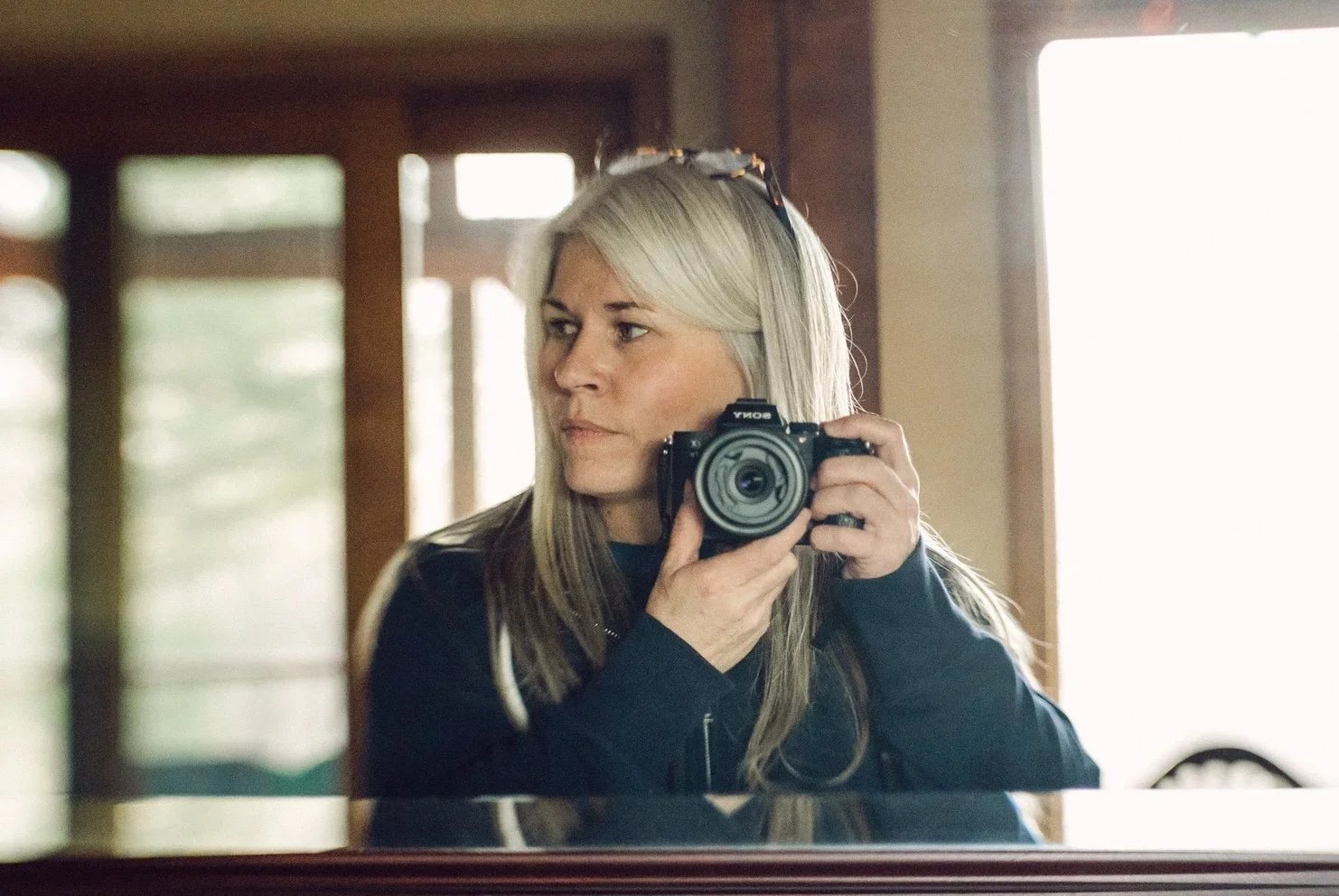
Francesca Russell is a documentary-style photographer and school PR rep based on Long Island, New York. She writes a personal Substack newsletter called "Glass Half Full," blending photography, place, midlife reflection, and creative practice. You can find her photography work on her website here.