JUDITH BLACK — The Public Family Album
MEMORY CULT Visiting Artist Series Presents
Judith Black
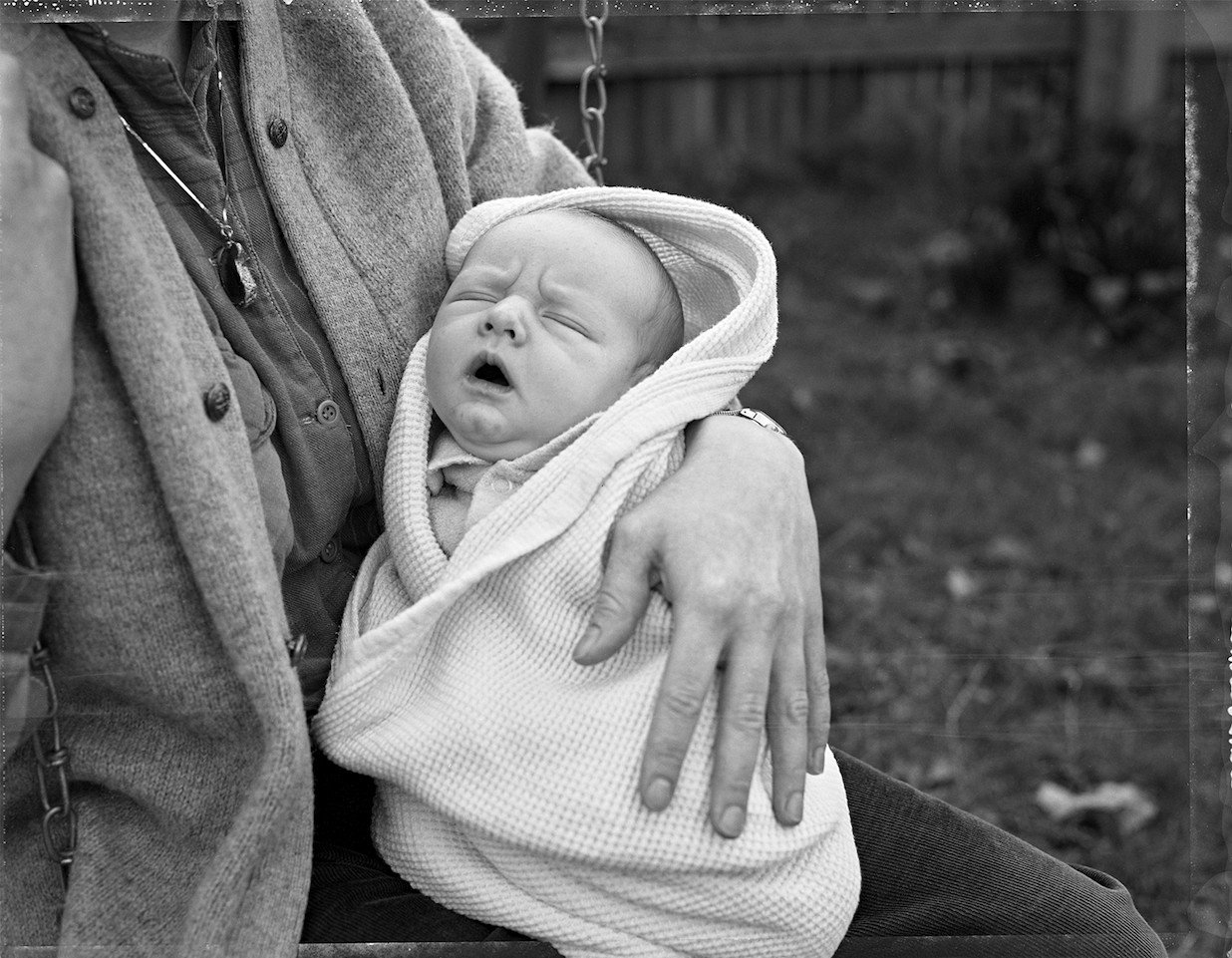
Known for her large format photographs using Polaroid Type 55 black and white film documenting the domestic interior and exterior, Judith Black has been a practicing photographer since 1979, when she entered the MIT photography program leading to a Master of Science in Visual Studies in 1981. During that time she realized that her most potent subject matter was close to home, recording her family of four children and partner. She has been a photographer with an eye for the strange and marvelous in the everyday, she has focused her lens with precision, humor, and deadpan reckoning. Her photographs of domestic life in its many dimensions have been exhibited throughout the US and abroad. A recipient of a Guggenheim Fellowship in 1986, Black was part of a new wave of photographers arising in the 1980s whose work revealed how the domestic interior, the lives of children, and the daily habits of the family are filled with meaning and arresting visual interest.
Grounded in both the craft and the theory of photographic representation, Black taught in the Art Department at Wellesley College from 1987 to 2010. She was the head of the photography area and was instrumental in creating and co-directing the Media Arts and Science program in concert with the Computer Science department.
Judith Black’s work has been shown at museums internationally and is included in permanent collections such as the Museum of Modern Art, the Museum of Fine Art Boston, the Huston Museum of Modern Art, Harvard University Art Museums, the Polaroid International Collection, Rose Art Museum and the Davis Museum and Cultural Center at Wellesley College.